Matt French — Artist Bio...
Matt French — Artist
Matt French didn’t grow up around art—he grew up inside it.
Raised in Whatcom County, Washington, his earliest memories are saturated with creativity. His mother, a fine artist, was constantly working—painting, experimenting, filling their home with visual energy. Murals weren’t something you saw in galleries; they were on the living room walls. Music was just as present, with his father’s musician friends regularly passing through, turning the house into a rotating studio of sound and expression.
For Matt, art was never a decision—it was a default state.
By the time other kids were being asked what they wanted to be, he was already drawing constantly. When someone asked him as a child if he was going to be an artist when he grew up, the question didn’t make sense. In his mind, he already was one.
Skateboarding: The Catalyst
Skateboarding entered early, but connection came later.
What started as exposure—friends with backyard ramps, borrowed boards, shared sessions—eventually became something deeper. By the mid-1980s, Matt was skating, but it wasn’t until a local street event—an alley rally blending skateboarding, break dancing, and street culture—that something clicked. Watching the skaters, he made a decision: this was it.
From that moment forward, skateboarding and art fused.
He didn’t just skate—he drew skateboarding. Decks, graphics, characters, culture. The influence was immediate and inseparable. Like many in the scene, he wasn’t consuming the culture—he was contributing to it.
The Turning Point: Jail, Ink, and Thrasher
Matt’s entry into the skateboard industry didn’t come through a formal path—it came through friction.
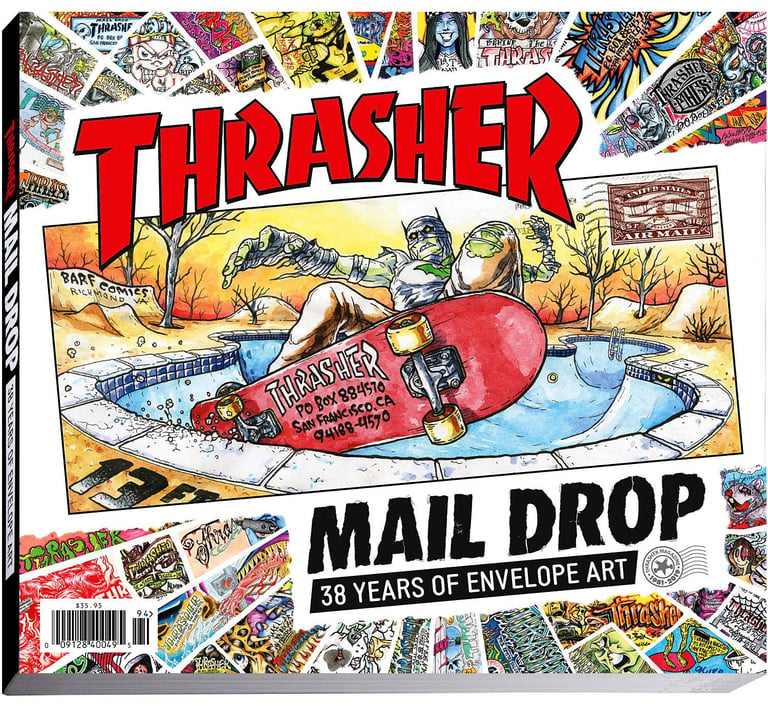
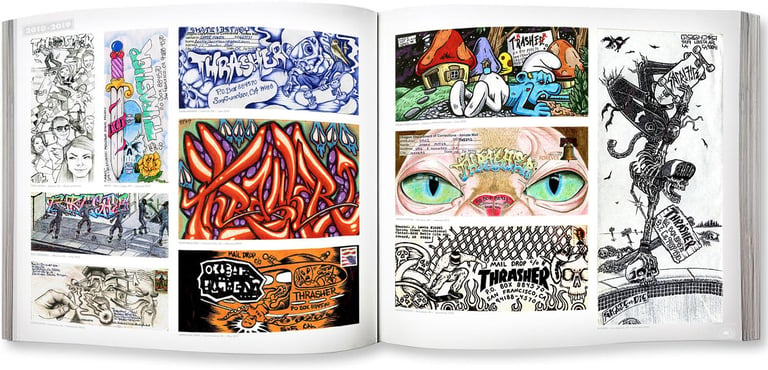
After getting arrested for graffiti in 1997, he served time in jail. With little to do, he drew constantly—decorating envelopes, creating artwork for other inmates, trading his skill for commissary. It was raw, transactional, and real. Art had immediate value. Then came the moment that changed everything. After being released, he opened an issue of Thrasher Magazine and saw decorated envelopes published inside. The same kind he had just spent weeks making. So he sent his work in. They printed it. That single validation shifted everything. If his work was good enough for Thrasher, it was good enough for the industry.
And he acted on it......
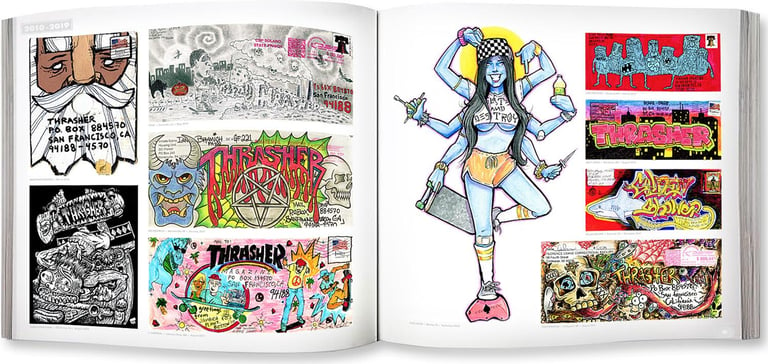
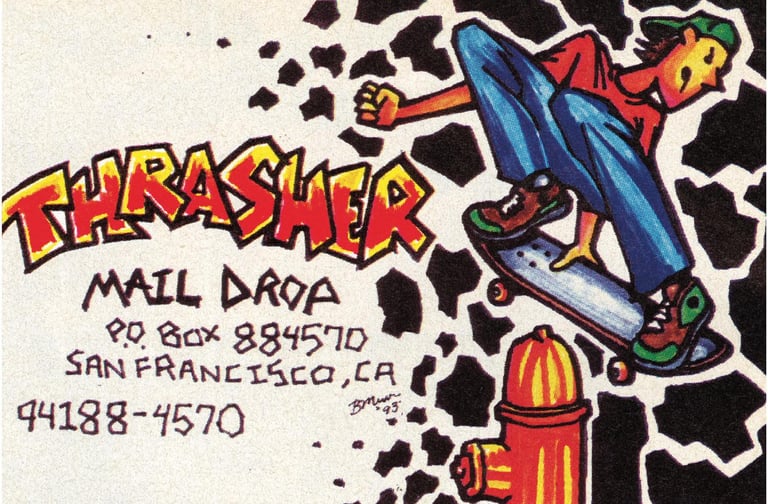
Breaking In: From Submissions to Industry Work
Following that first publication, Matt began submitting work to companies. Rejection came, but so did encouragement—“keep sending.” Then came a mindset shift. After a vivid dream where he walked confidently into a space filled with influential creatives—as if he belonged there—something clicked internally. The hesitation disappeared. He stopped asking for permission and started operating as if he was already part of the world he wanted to be in. Shortly after, the work started landing. He began creating graphics for companies like Mervin Manufacturing (Lib Tech) and quickly moved into working with industry-defining brands under Tum Yeto, contributing to projects for Foundation, Pig Wheels, and Toy Machine.
From there, momentum built.
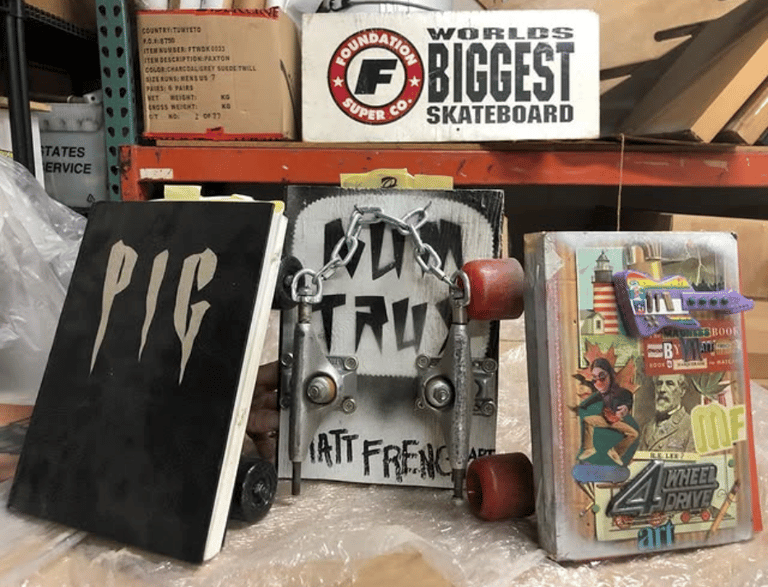
A set of early art books sent by Matt French to Tum Yeto at the start of his art career. The books resurfaced years later, showing original sketches, layouts, and experimental illustration work from the period. This highlights the early development of French’s visual language.
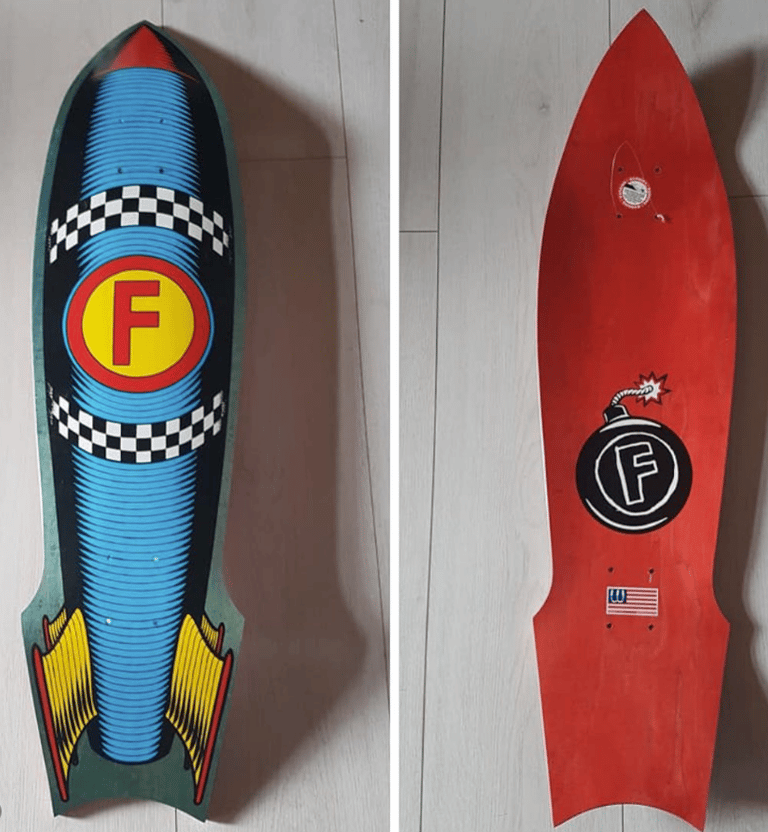
f-bomb concept and designed by Matt French
Building a Career in Skate Art
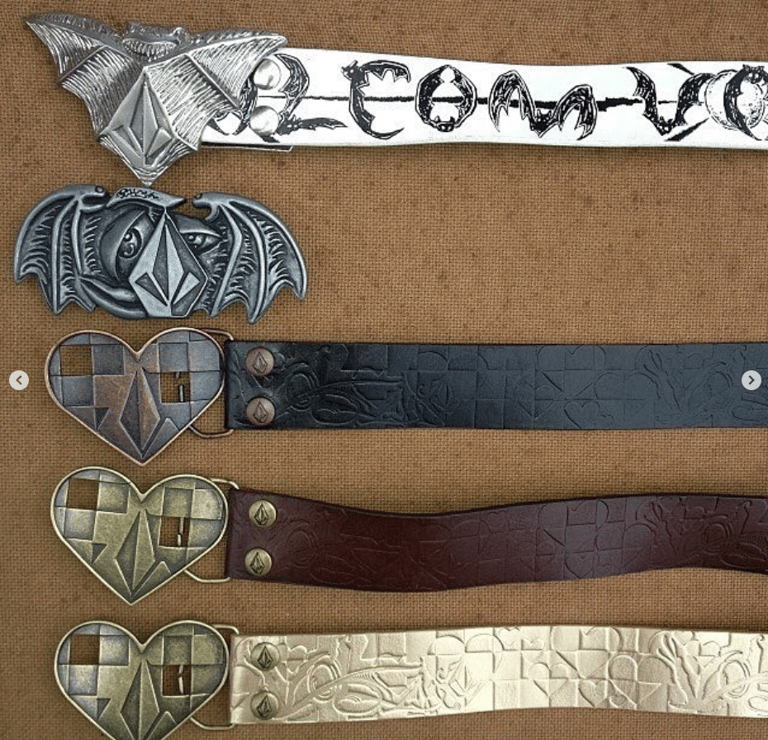
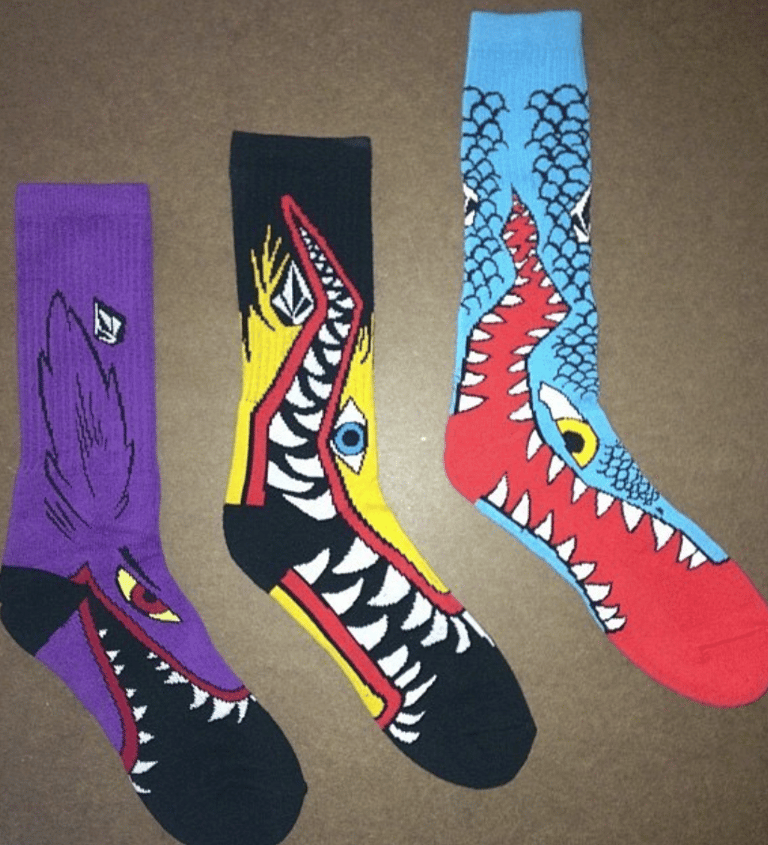
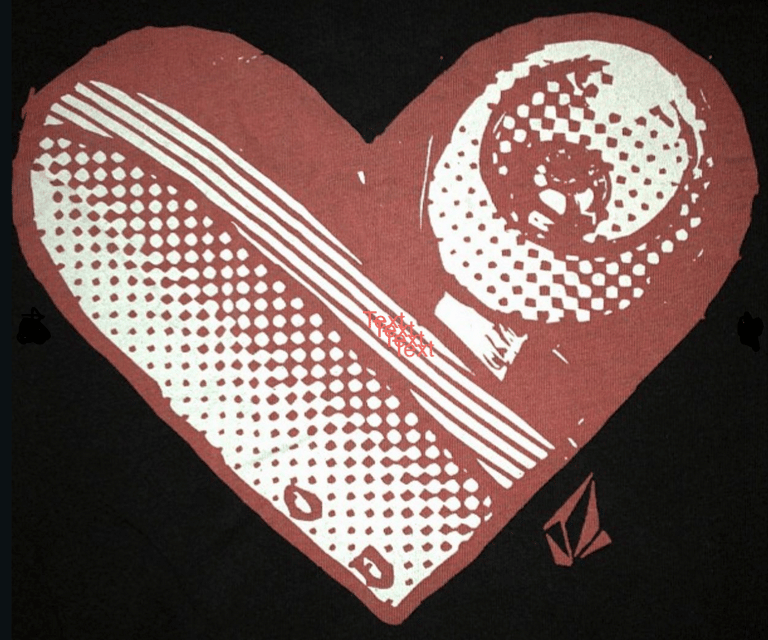
Over the next decade, Matt became a consistent force behind the scenes in skateboarding and adjacent industries.He worked with Volcom for nearly ten years (2004–2014), contributing to a wide range of visual projects. He collaborated across skateboarding and snowboarding brands, including Lib Tech, Grenade Gloves, and others—often stepping into spaces not because he was part of the culture, but because his work translated across it. He also took on deeper creative roles—art directing for Pocket Pistols and working with Screaming Squeegees, producing graphics for multiple brands and pro riders.
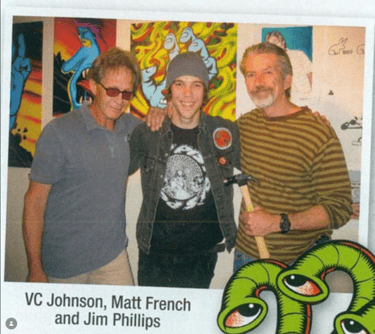
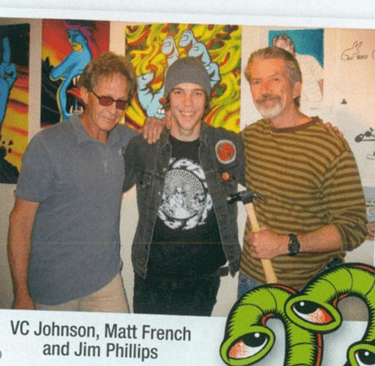
One of his standout contributions was bringing legendary skate artist Jim Phillips and VCJ (Vernon Courtlandt Johnson) out of retirement to collaborate on projects—bridging generations of skate art.
On the World Stage
Matt’s work didn’t stay local. He contributed to international exhibitions, including a global Volcom art tour and a solo show in Tokyo’s Shibuya district—one of the most high-profile retail and cultural zones in the world. The Tokyo exhibition drew thousands, with lines wrapping around the block. He’s collaborated on projects connected to major global brands, including work with Nike, and contributed artwork tied to large-scale campaigns like NBA-related street wear launches.
His reach extends beyond decks—into apparel, product design, and branded collections. One example is his “Spraying Hands” concept, a reinterpretation of M. C. Escher’s visual logic, adapted into skate product lines and merchandise.